
Clear aligners have become one of the most requested ways to straighten teeth, and most people comparing them are really comparing two very different things: doctor-led care and a mail-order kit. It’s a fair question to ask before you click “order kit.” The trays may look similar. The care behind them is not.
What Are Clear Aligners?
Clear aligners are removable, custom-made plastic trays that move your teeth in small, planned stages. You wear each tray for a set period, then switch to the next one in the series. Systems like Invisalign clear aligners are FDA-cleared Class II medical devices, not cosmetic products, which is why a real diagnosis matters more than the plastic itself.
Patients hear a lot of brand names: Invisalign, Spark, ClearCorrect, plus the mail-order kits advertised online. Two very different things get mixed together in those ads.
The first is the appliance. The second is the care model.
An appliance is just a tool. The care model decides whether that tool is used safely, in the right sequence, with someone licensed watching your roots and bite along the way. Doctor-supervised aligner treatment includes X-rays, an in-person exam, and adjustments when teeth don’t cooperate. Mail-order treatment skips most of that, and the gap shows up later rather than sooner.
Your beautiful, straight smile comes from the diagnosis and the plan. Not the plastic.
How Clear Aligner Treatment Works Step by Step
Clear aligner treatment works in five steps: a full exam with digital scans and X-rays, a 3D plan built by your orthodontist, custom trays fabricated for your teeth, daily wear of 20 to 22 hours with scheduled tray changes, and progress checks that end with retainers. Each step depends on the one before it.
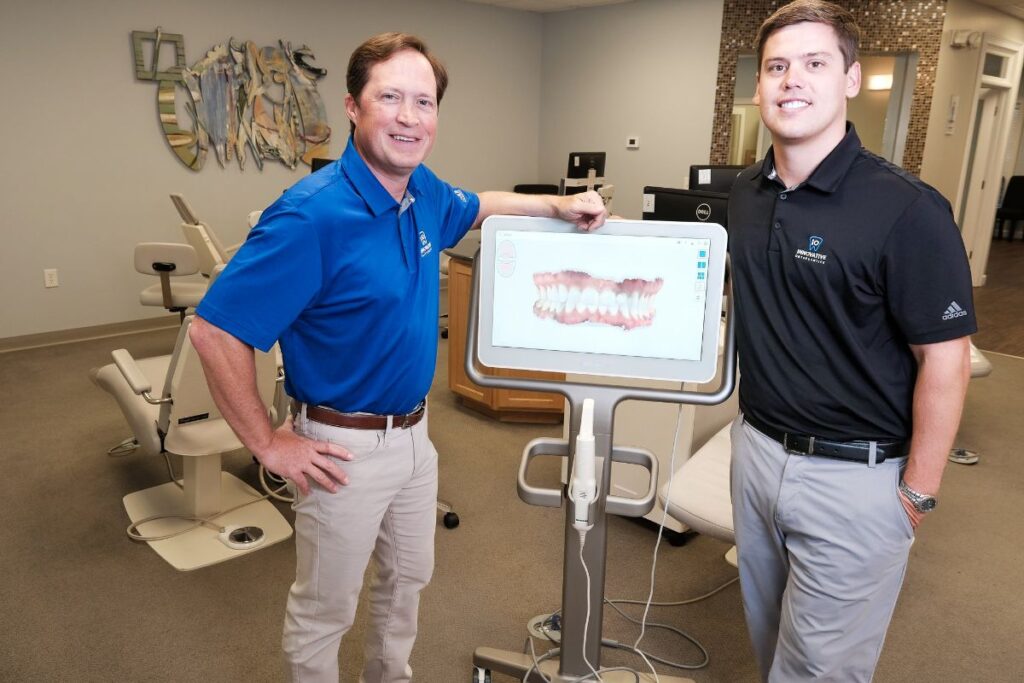
- Exam and records. Dr. Waters, Dr. Clayton, or Dr. Pearson reviews your teeth, gums, roots, bone levels, and bite. Digital scans replace the old goopy trays, and X-rays show what photos never can.
- 3D planning. Your custom treatment plan maps every movement in order. Some teeth move early, some late, and sequencing matters as much as the total distance traveled.
- Fabrication and fitting. Your trays are made for your teeth only. Small tooth-colored attachments may be bonded to certain teeth so the aligners have something to grip and push against.
- Daily wear. You wear each set 20 to 22 hours a day, removing them to eat, drink anything but water, and brush. You switch trays on the schedule your orthodontist sets.
- Checks, refinements, and retention. Progress visits confirm teeth are tracking. If they aren’t, the plan gets revised with refinement trays. Retainers hold everything in place once active treatment ends.
Mail-order kits compress all of this into an impression mailed to a lab. No X-rays. No in-person exam. No mid-course correction when a tooth stalls.
Why Choose Doctor-Supervised Clear Aligners?
Supervision is the whole difference. Here’s what it buys you:
- Real diagnostics. X-rays and an in-person exam reveal short roots, bone loss, gum disease, impacted teeth, and jaw joint issues. Selfies and a home impression can’t show any of that.
- A plan that can change. Teeth don’t always follow the computer model. A licensed orthodontist can pause, re-scan, and rebuild the sequence when a tooth doesn’t track.
- Bite correction, not just front-tooth cosmetics. Straight-looking front teeth with a bad bite is a short-term win. Your orthodontist plans how your back teeth meet, too, because that’s what keeps the finish stable.
- Tools trays alone can’t replace. Attachments, elastics, and interproximal reduction (gentle polishing between teeth to create space) make movements possible that plastic by itself simply can’t accomplish.
- Fast answers when something goes wrong. A popped attachment, a sharp edge, a lost tray, soreness that lingers. You come in, we handle it, you move on.
- Retention planning. Teeth drift for life. Your retainer plan is built in from the start, not sold to you later as an afterthought.
None of this is about adding visits to your calendar. It’s about catching small things while they’re still small and keeping your treatment moving in the right direction from tray one to the last one.
Dr. Pearson is a board-certified orthodontist, and every clear aligner case at Innovative Orthodontics is planned and monitored by a specialist, not a remote reviewer.

Local Orthodontic Care vs. Mail-Order Aligners: A Side-by-Side Comparison
Both options straighten teeth in theory. What separates them is everything that happens around the trays.
| What matters | Doctor-led care at Innovative Orthodontics | Mail-order aligners |
|---|---|---|
| Diagnostics | In-person exam, digital scans, and X-rays of roots and bone | At-home impression kit or a single scan visit; typically no X-rays |
| Who’s watching | Named orthodontist as your provider of record, seen in person | Remote review of photos you submit |
| Bite correction | Planned as part of treatment, including elastics when needed | Generally limited to front-tooth alignment |
| Mid-course changes | Re-scans and refinement trays when teeth don’t track | Limited options; plan largely locked at purchase |
| Case types accepted | Mild through complex, plus hybrid braces-and-aligner plans | Mild crowding, minor spacing, or retainer relapse |
| Problems and repairs | Same-week visits for loose attachments, sore spots, or lost trays | Email, chat, or mailed replacements |
| Retention | Retainer plan and fit check built into your care | Sold separately in most cases |
The American Association of Orthodontists has publicly cautioned consumers about direct-to-consumer aligners, raising concerns about treatment without in-person exams, X-rays, or direct supervision by a licensed orthodontist or dentist.
Accountability is the quiet issue here. When a licensed provider of record is responsible for your case, someone with a specialty license is answerable for the outcome.
What Affects the Cost of Clear Aligner Treatment
Clear aligner cost varies mainly by case complexity and treatment length. A short case with a handful of trays costs less than a two-year case with attachments and refinements. Doctor-led pricing usually bundles records, in-person visits, monitoring, and retainers, so compare what’s included rather than sticker price alone.
| Cost factor | Why it matters |
|---|---|
| Number of aligners | More movement means more trays and more months |
| Attachments and IPR | Added chair time and technique for tougher movements |
| Refinements | Second round of trays to finish the details |
| Included visits | Progress checks and repairs folded into one fee |
| Retainers | Often bundled in supervised care, sold separately elsewhere |
Mail-order’s lower advertised price usually reflects what’s missing: no X-rays, no in-person monitoring, no refinements, and no plan for retreatment if teeth end up in the wrong place. Fixing an unsupervised case afterward often costs more than treating it correctly the first time.
Ask for the full number in writing before you start, including records, visits, refinements, and retainers. A quote that covers everything is far easier to compare than a monthly figure with pieces quietly left out of it.
Orthodontic insurance benefits frequently apply to supervised treatment, and FSA or HSA dollars can usually be used as well. We also offer easy financing, because you deserve a payment plan that fits your budget.
Your free consult is where the real numbers come from. Every mouth prices differently.

Are You a Good Candidate for Clear Aligners?
Most people are better candidates than they think. Good fits include:
- Mild to moderate crowding
- Spacing and gaps
- Relapse after previous braces
- Many bite issues, including overbites, underbites, and crossbites, when paired with elastics or attachments
- Teens and adults alike; it’s never too late for a confident smile
A few things need to be in place first. Healthy gums, treated cavities, and honest 20 to 22 hour daily wear. Aligners only work while they’re in your mouth.
Wear time is the piece patients underestimate most. Trays left in a napkin at lunch or sitting on a nightstand overnight add weeks to your treatment, and those weeks add up quietly over the course of a year.
Growth stage matters for younger patients, so timing gets discussed carefully with parents. Some complex cases finish faster and more predictably with metal braces, clear braces, or a hybrid plan that uses both braces and aligners.
Only an in-person exam with X-rays can confirm what’s right for you. Dr. Waters or Dr. Clayton will tell you straight, even when the answer is “braces would serve you better.”
Start with a free, no-pressure consultation, or begin with a HIPAA-compliant virtual visit from home if that’s easier.
Frequently Asked Questions About Clear Aligners
How long does clear aligner treatment take?
Most clear aligner cases run about 12 to 24 months, though minor corrections can finish in a few months. Length depends on how far your teeth need to move and how consistently you wear your trays. Skipping wear time is the single most common reason treatment stretches longer than planned. Your orthodontist can give you a realistic range once your digital scans and X-rays have been reviewed together.
Are mail-order aligners safe?
They carry more risk than doctor-supervised treatment. The American Association of Orthodontists has raised concerns about direct-to-consumer aligners being used without X-rays, an in-person exam, or ongoing supervision by a licensed orthodontist. Moving teeth without knowing the condition of your roots, bone, and gums carries real risk. If you already started a mail-order case and something feels off, get examined in person.
Can clear aligners fix an overbite or crossbite?
Often, yes. Bite correction with aligners usually requires attachments, elastics, and careful sequencing planned by an orthodontist. Some deep bites and skeletal issues respond better to braces or a combination approach, which is exactly what an exam and X-rays help determine.
Do clear aligners hurt?
Expect pressure and mild tenderness for a day or two after switching to a new tray. That feeling means the aligner is working. Most patients describe it as soreness rather than anything sharp, and it fades quickly. Switching trays before bed and sipping cool water makes that first night noticeably easier. If a tray edge irritates your gums or cheek, come see us and we’ll smooth it.
What happens if a tooth doesn’t move as planned?
Your orthodontist catches it at a progress check and adjusts. That may mean re-scanning, ordering refinement trays, adding an attachment, or changing your elastics. This mid-course correction is the piece mail-order treatment can’t really offer, and it’s often what separates a finished case from a half-finished one.
Do I need retainers after clear aligners?
Yes, and this part isn’t optional. Teeth naturally drift throughout life, so retainers hold your beautiful, straight smile where we placed it. Most patients wear retainers full time briefly, then nights indefinitely. Your retention plan is part of your custom treatment plan from day one. If you’re still weighing your options, a free consult with digital scans is the simplest way to see what your teeth actually need.